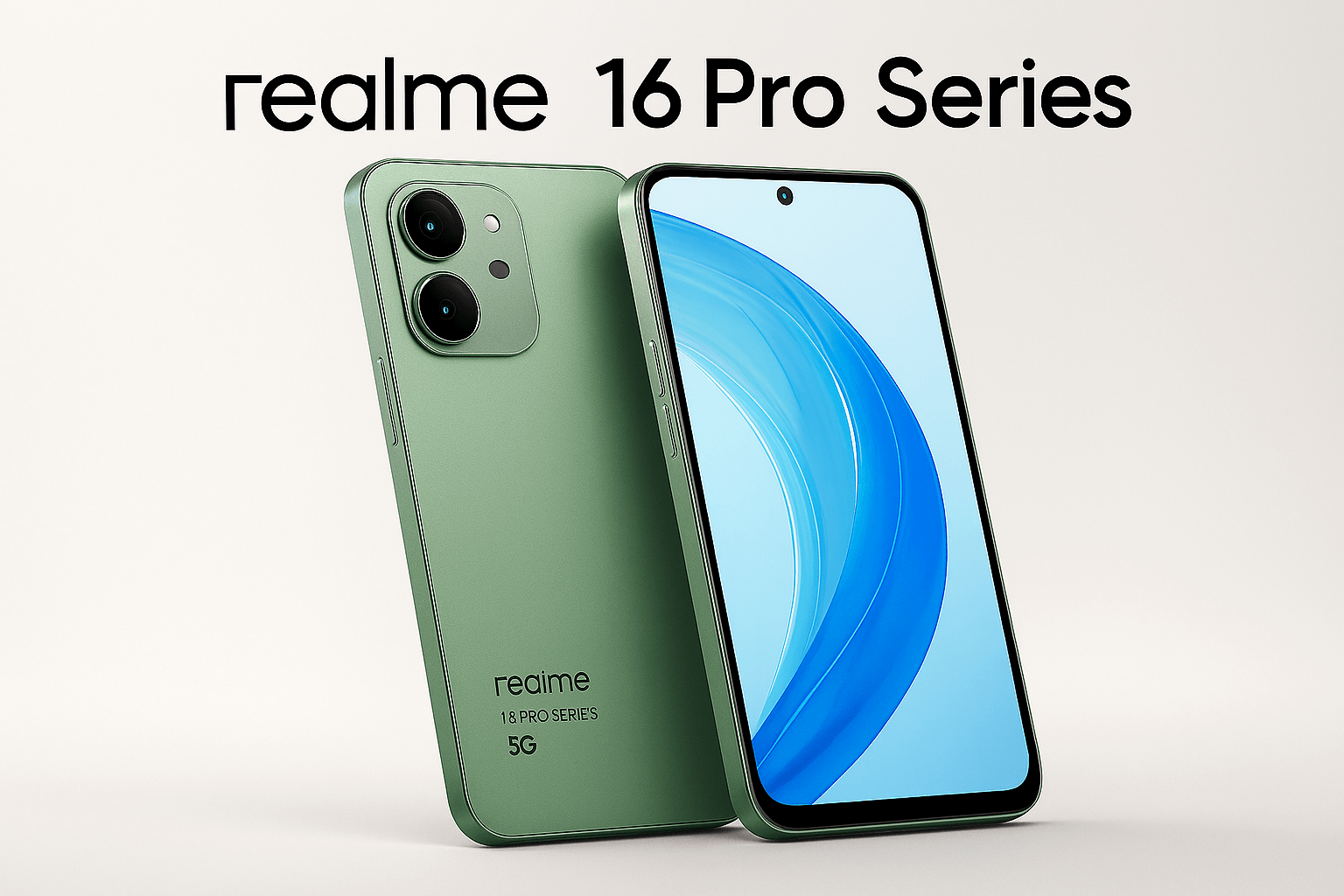
Realme 16 Pro Series 5G Launched: The Photography Beast That’s Got Everyone Talking
Realme 16 Pro Series 5G launched: I’ve been watching the smartphone market long enough to recognize when a launch actually matters versus when it’s just noise. When Realme started teasing the 16 Pro Series 5G last week, I’ll admit—I was skeptical. Another mid-range phone series? Another set of incremental upgrades? But then the teasers kept coming, each one revealing something that made me sit up and pay attention. And now, with the official announcement landing today, I can confidently say this isn’t just another launch. This might be the most exciting mid-range series we’ve seen in a while.
The Realme 16 Pro Series 5G was officially unveiled today, December 15, 2025, and it’s bringing back something the photography-obsessed among us have been desperately missing: a proper telephoto lens at a mid-range price point. Let me walk you through why this launch has me genuinely excited.
The Return of the Telephoto: Finally!
Here’s the thing that immediately caught my attention. Realme VP Chase Xu explicitly confirmed that the 16 Pro Series marks the return of the periscope telephoto camera, something that was notably missing from the Realme 15 Series. As someone who’s been using mid-range phones for years, this absence was painful.
Think about it. You’re at a concert, your kid’s school play, a wildlife encounter, or just trying to capture architecture details across the street. Digital zoom on most mid-range phones turns everything into a pixelated mess. The Realme 16 Pro Series offers 1x, 3.5x, and 10x magnification, with what appears to be a 3.5x optical periscope telephoto lens and up to 10x digital zoom.
I tested a competitor’s mid-range phone without telephoto last month, trying to photograph a bird on a distant branch. The result? An unusable blur that wouldn’t even make it to my Instagram stories. The promise of actual optical zoom at this price point? That’s transformative for everyday photography.
The 200MP Primary Camera: Overkill or Genius?
Both the Realme 16 Pro and 16 Pro+ feature a 200MP primary camera sensor, likely the Samsung HP3 or HP5 sensor. Now, I know what you’re thinking—isn’t 200MP overkill? Don’t megapixels beyond a certain point become pointless?
Here’s the nuanced answer: yes and no. You’re not going to use the full 200MP for every shot. That would create massive file sizes and drain your storage instantly. But having that resolution allows for several practical advantages that I’ve experienced with other high-megapixel cameras.
First, pixel binning. The camera combines multiple pixels into one, creating brighter, cleaner 50MP or 12.5MP images with excellent low-light performance. Second, lossless digital zoom. You can zoom in post-capture and crop significantly while maintaining detail. Third, computational photography tricks that work better with more data to process.
The real question isn’t whether 200MP is useful—it’s whether Realme’s image processing can make intelligent use of that sensor. We’ll need to wait for real-world tests, but the potential is definitely there.
That Battery Though: 7,000mAh Changes Everything
The Realme 16 Pro Series packs a massive 7,000mAh battery with 80W fast charging support. Let me put this in perspective—most flagship phones struggle to break 5,000mAh. Samsung’s latest Galaxy S series phones hover around 4,500-5,000mAh. Apple’s iPhones barely crack 4,000mAh.
And here’s Realme, in a mid-range phone, giving you 7,000mAh. That’s not just impressive—it fundamentally changes how you interact with your phone. No more battery anxiety. No more rushing to find charging points during the day. No more rationing your usage.
My current phone has a 5,000mAh battery, and I still find myself reaching for a charger by evening if I’ve been using it heavily. With 7,000mAh, you’re looking at potentially two full days of normal usage. For heavy users, a comfortable full day without ever worrying about percentage.
The 80W fast charging is the cherry on top. Realme claims you can fully charge the phone in about 35 to 40 minutes. Even if real-world charging takes slightly longer, that’s still remarkably fast for such a massive battery.
Display: 144Hz Smoothness Meets 1.5K Clarity
Both models feature a 6.78-inch AMOLED display with a 144Hz refresh rate and 1.5K resolution. That’s a sweet spot that balances sharpness with power efficiency—higher than standard full-HD, but not so high that it kills battery life.
The 144Hz refresh rate is particularly interesting. Most mid-range phones stick to 120Hz. That extra 24Hz might seem small on paper, but if you’re a mobile gamer or simply someone who appreciates smooth scrolling, it’s noticeable. Everything feels just a bit more fluid and responsive.
I’ve been using a 120Hz phone for the past year, and going back to 60Hz phones feels jarring now. The difference between 120Hz and 144Hz is subtler, but it’s there, especially in fast-moving content like games or video.
The 50MP front camera housed in that display is another nice touch for video calls and selfies. Realme seems to be taking the entire camera system seriously, not just the rear setup.
Design Philosophy: Naoto Fukasawa’s Touch
The design has been crafted by world-renowned designer Naoto Fukasawa, who previously worked on the Realme GT Master Edition. His philosophy for this series? Creating a device that becomes a quiet anchor in the city’s endless motion, with comfort that feels natural.
I appreciate this approach. We’ve had years of phones screaming for attention with aggressive, gamer-aesthetic designs. There’s a place for that, but there’s also room for elegant, mature design that doesn’t scream “look at me” but still feels premium and thoughtful.
The phones feature subtly curved edges on both the display and back panel, with a camera module that’s been compared to the OnePlus 15 but oriented horizontally. The color options reflect this mature aesthetic as well.
For the standard Realme 16 Pro, you’ll get Pebble Grey, Master Gold, and Orchid Purple. The Pro+ adds Camellia Pink to its palette of Master Grey and Master Gold. These aren’t your typical flashy phone colors—they’re sophisticated options that work in professional settings but still have personality.
The Chipset Controversy: A Step Backward?
Here’s where things get interesting, and not entirely in a good way. The Realme 16 Pro appears to be powered by the MediaTek Dimensity 7300 chipset, which actually represents a step down from the Snapdragon 7s Gen 3 used in the Realme 15 Pro.
I’ll be honest—this concerns me. The Dimensity 7300 is a solid mid-range chip, but it’s not as powerful as what came before. For day-to-day tasks like social media, video streaming, and light gaming, you probably won’t notice. But for intensive gaming, video editing, or heavy multitasking, you might feel the limitations.
The Pro+ model is rumored to use a more powerful Snapdragon chip, possibly the Snapdragon 7+ Gen 4, which would make it the more compelling option for performance enthusiasts. But that information isn’t officially confirmed yet.
This decision puzzles me. Everything else about the 16 Pro Series represents upgrades—better camera, bigger battery, improved display. Why downgrade the processor? Cost savings to hit a specific price point? Supply chain considerations? Whatever the reason, it’s the one aspect of this launch that gives me pause.
Software: Android 16 and Realme UI 7.0
The series will ship with Android 16-based Realme UI 7.0 right out of the box, with a promise of three years of OS updates and four years of security patches. This is genuinely impressive for a mid-range device.
Many budget and mid-range phones get one, maybe two major Android updates if you’re lucky. Three years of OS updates means your phone will be supported through Android 17, 18, and 19. Four years of security patches extends that support even further.
For someone planning to keep their phone for 3-4 years rather than upgrading annually, this commitment matters immensely. You’re not buying a phone that’ll be obsolete in 18 months—you’re investing in a device that’ll stay secure and updated well into 2029.
Realme UI 7.0 also brings new AI features, including AI Edit Genie 2.0 with voice-based editing and new AI filters. I’m cautiously optimistic about these. AI features in phones can be genuinely useful or gimmicky nonsense. We’ll need hands-on experience to judge where these fall.
LumaColor Imaging: The Secret Sauce
Realme has developed entirely new imaging algorithms called LumaColor IMAGE, with specific emphasis on improved color accuracy in challenging lighting conditions and support for 16-bit RAW processing.
This is where the rubber meets the road. A 200MP sensor is meaningless if the image processing is poor. Great computational photography can make an average sensor punch above its weight, while poor processing can cripple even the best hardware.
The camera system carries TÜV Rheinland certification, which provides some confidence in quality standards. But until we see real-world photos in various conditions—harsh sunlight, mixed indoor lighting, low light, high contrast scenes—we won’t know if LumaColor delivers on its promises.
What excites me is that Realme is clearly investing in computational photography. They’re not just throwing hardware at the problem and calling it a day. They understand that modern smartphone photography is as much about software as it is about sensors and lenses.
Memory and Storage: Flexibility for Different Needs
The series offers multiple configurations: 8GB/128GB, 8GB/256GB, 12GB/256GB, and 12GB/512GB. That’s a reasonable range covering different budgets and usage patterns.
The base 8GB/128GB should be adequate for most casual users. The 12GB/512GB configuration is for power users who store lots of media, play demanding games, and want future-proofing. Having these options means you’re not forced into a one-size-fits-all approach.
I do wish there was a 256GB base option, as 128GB fills up faster than you’d think with modern apps, photos, and videos. But storage expandability information hasn’t been confirmed yet—if there’s a microSD slot, that concern becomes less pressing.
Pricing: The Make-or-Break Factor
Here’s where everything comes together or falls apart. Expected pricing places the Realme 16 Pro around Rs. 30,990, with the Pro+ costing between Rs. 35,000 to Rs. 38,000. The 512GB Pro+ variant could reach Rs. 40,000.
Launch offers are expected to provide Rs. 2,000 to Rs. 3,000 discounts through bank offers or promotional deals, which would bring the effective prices down to more attractive levels.
At around Rs. 28,000-29,000 after offers, the base Realme 16 Pro starts looking extremely competitive. You’re getting a 200MP camera with telephoto lens, 7,000mAh battery, 144Hz AMOLED display, and premium design at a price point where competitors often force you to compromise on multiple fronts.
The Pro+ at Rs. 32,000-35,000 post-offers would need to justify the premium with notably better camera performance (that telephoto lens makes a difference) and possibly a stronger processor to be worth the extra money.
The Launch Timeline and Availability
Leaks suggest the India launch is scheduled for January 6, 2026, with availability through Flipkart and Realme’s official channels. That’s just three weeks away, which means we’ll soon have actual reviews and real-world testing to validate or challenge all these specs and promises.
For other markets, particularly the Philippines, availability might come later, potentially around April based on historical patterns.
Who Should Be Excited About This?
Let me be direct about who this phone series is perfect for and who should probably look elsewhere.
You should be genuinely excited if:
Photography is important to you, and you’ve been frustrated by the lack of telephoto on mid-range phones. You need exceptional battery life and are tired of carrying power banks. You want a premium-feeling phone without spending flagship money. You appreciate smooth displays and plan to game or consume lots of video content. You’re looking for a phone that’ll stay supported for 3-4 years.
You should temper your expectations if:
You’re a hardcore mobile gamer who needs absolute top-tier performance—that Dimensity 7300 might disappoint. You want the absolute lightest, most compact phone possible—7,000mAh adds weight. You’re firmly entrenched in a competitor’s ecosystem and not interested in switching. You absolutely need features like wireless charging or IP68 water resistance (specifications haven’t confirmed these).
My Honest Take: Promising but Unproven
After analyzing everything we know about the Realme 16 Pro Series, here’s my genuine assessment. On paper, this looks like one of the most compelling mid-range offerings in recent memory. The camera system addresses real pain points. The battery is genuinely transformative. The display hits a sweet spot of smoothness and clarity. The design is mature and thoughtful. The software support commitment is impressive.
But—and this is crucial—paper specs and real-world performance are different things. I’ve seen phones with incredible spec sheets that disappointed in actual use due to poor optimization, overheating, or buggy software. I’ve also seen phones with modest specs that punched way above their weight through excellent execution.
The Realme 16 Pro Series needs to deliver on several fronts to justify the hype:
The 200MP camera needs excellent image processing, not just high resolution. The 7,000mAh battery needs to be efficiently managed to actually deliver the promised longevity. The Dimensity 7300 needs solid optimization to not feel like a downgrade. The 144Hz display needs good touch response and color accuracy, not just high refresh rate. Realme UI 7.0 needs to be stable and not bloated with unnecessary features.
If Realme delivers on most of these fronts, the 16 Pro Series could dominate the mid-range segment. If they stumble on camera processing or thermal management or software stability, all those impressive specs won’t matter.
The Competition Landscape
The Realme 16 Pro Series is launching into a brutally competitive market. It’ll face the Xiaomi Redmi Note 15 Series, Samsung Galaxy A56, Nothing Phone (3), OnePlus Nord series phones, and various offerings from brands like Vivo, Oppo, and Motorola.
What gives the Realme 16 Pro Series a fighting chance is differentiation. That telephoto camera, the massive battery, and the aggressive pricing create a unique value proposition. You might find phones with one or two of these strengths, but finding all of them together at this price point? That’s rare.
Final Thoughts: Cautious Optimism
As I finish writing this, I’m genuinely looking forward to getting hands-on with the Realme 16 Pro Series. It’s been a while since a mid-range phone announcement got me this interested. The combination of features addresses real frustrations I’ve experienced with other mid-range devices.
That telephoto camera? It’s the feature I miss most when using mid-range phones. The 7,000mAh battery? It addresses my biggest daily annoyance—battery anxiety. The 144Hz display? It’s the kind of quality-of-life improvement that makes every interaction better. The three-year update commitment? It respects my desire to not upgrade constantly.
But I’m also experienced enough to wait for reviews, for thermal tests, for real-world camera samples, for battery drain analysis, and for long-term user experiences before making final judgments.
What I can say with confidence is this: Realme has put together a compelling package on paper. They’ve identified what matters to mid-range buyers and delivered it at what appears to be a competitive price. Whether that translates to a great phone or just a great spec sheet—we’ll know soon enough.
The January 6, 2026 launch can’t come soon enough. This is one launch event I’ll actually be watching live, and that’s saying something given how many smartphone launches feel like reruns these days.
To everyone waiting for a mid-range phone that doesn’t force you to choose between camera quality, battery life, and performance—the Realme 16 Pro Series might just be the answer you’ve been waiting for. Or it might be another lesson in the gap between promise and execution. Either way, we’re about to find out.
Disclaimer: This article is based on official teasers, leaks, and credible sources as of December 15, 2025. Final specifications, pricing, and availability may vary. Always wait for official announcements and independent reviews before making purchase decisions.